Every sale was recorded, but the counts drifted again
After reconciling the missed sales and delivery entry, Maya Collins kept Juniper Street Bakery’s routine simple. Sales were entered before customers left, and deliveries were checked against packing slips.
The following week, three products were off again: marionberry jam, bottled cold brew, and daily sourdough. This time, no sale or purchase was missing. Three less-routine events had happened instead.
- A customer brought back one unopened jar of jam.
- Two damaged cold brews went back to the supplier.
- Three unsold loaves were discarded at closing.
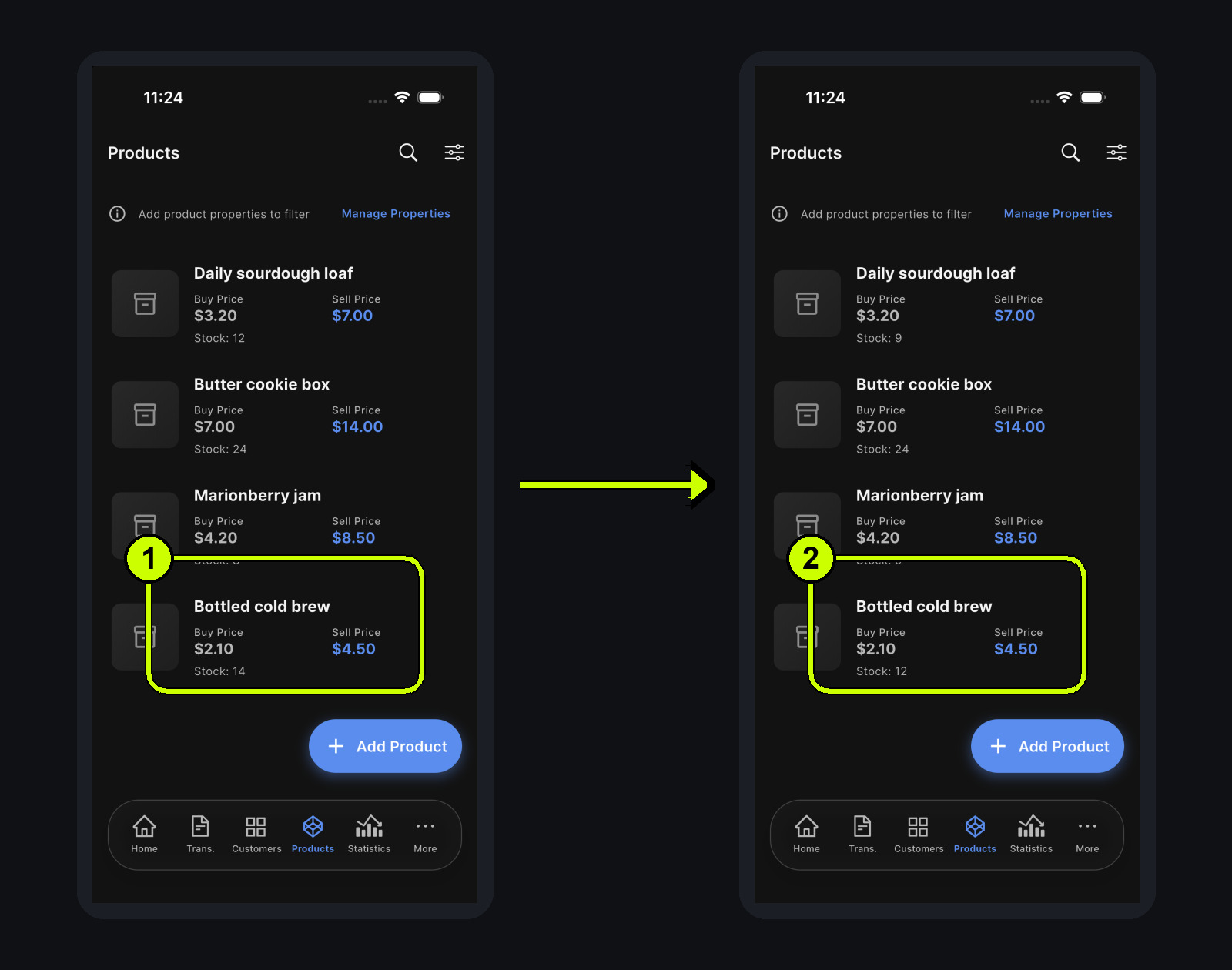
A customer return brings stock back into the bakery
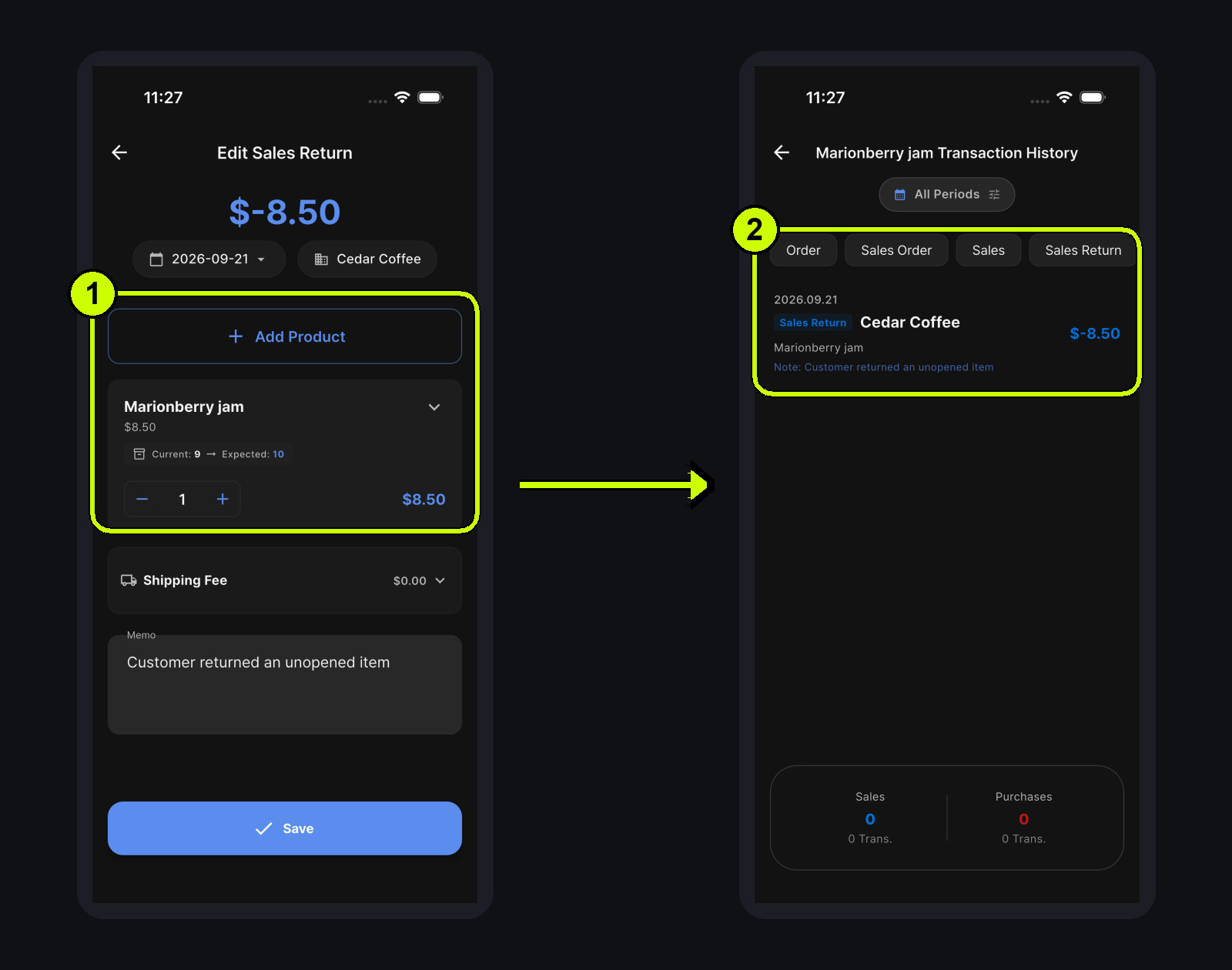
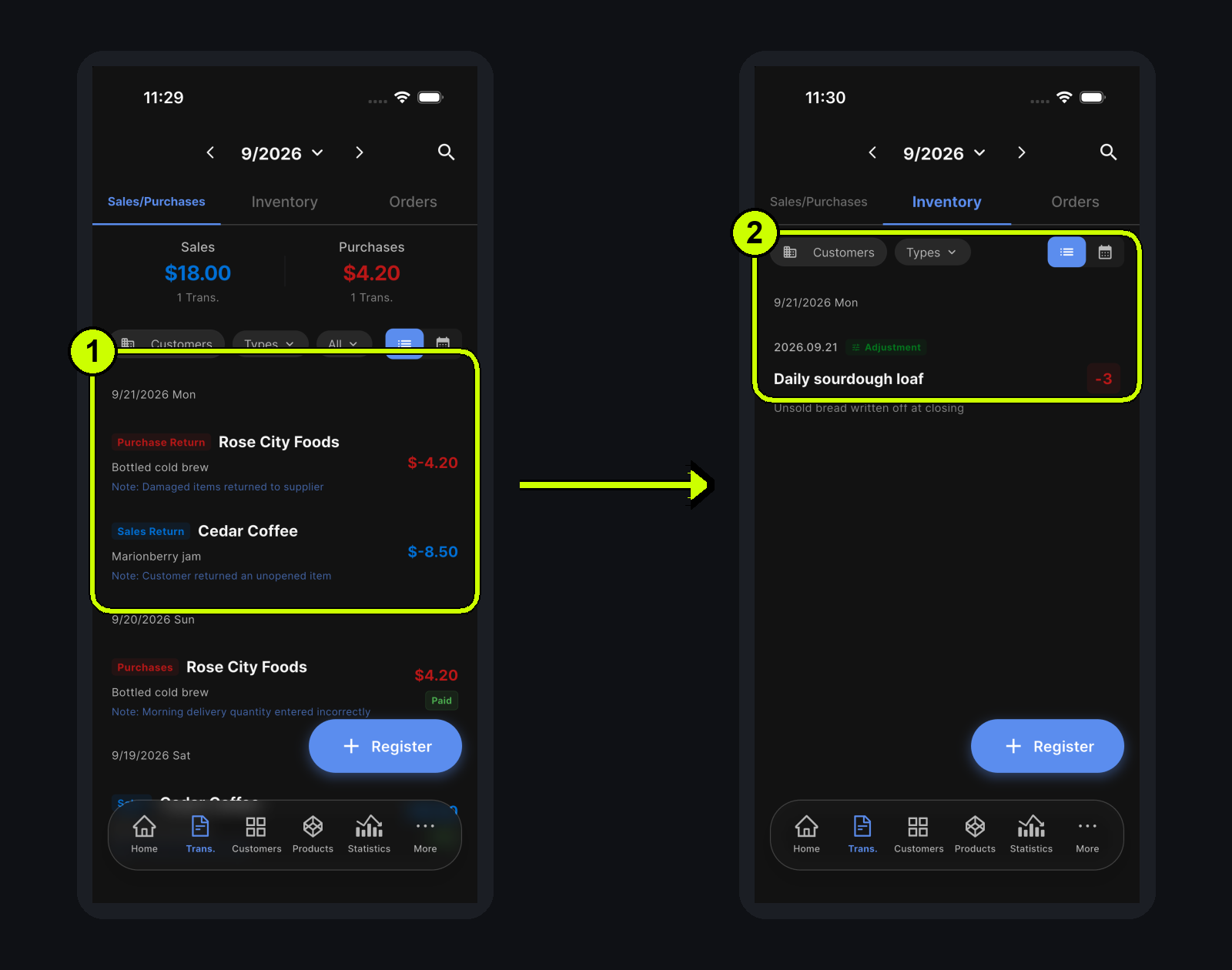
A customer returned an unopened jar of jam. Refunding the payment without recording the returned item would fix the money side but leave the product outside inventory.
This is a sales return. The original sale removed one jar; the returned jar is now physically back on the shelf, so stock increases by one. Enter the quantity that actually came back and let the return transaction preserve the direction.
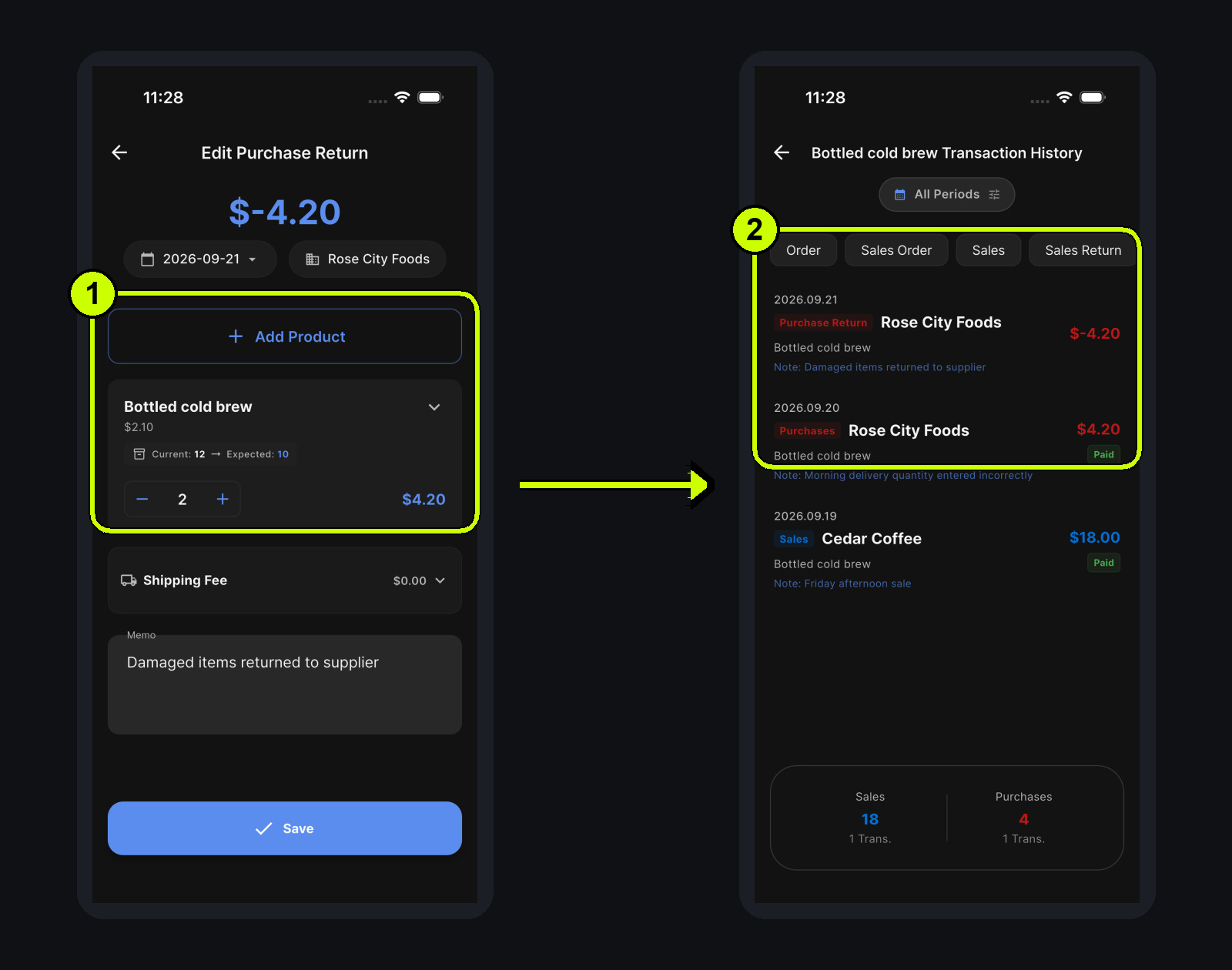
A supplier return sends stock out in the opposite direction
Two bottles in a new delivery were damaged. Rose City Foods agreed to collect them, and Maya handed the case back to the driver.
That is a purchase return. The products originally entered inventory through a purchase, then left the bakery when they went back to the supplier. Stock therefore decreases by two. Editing only the purchase amount or leaving a note would not clearly show where those two bottles went.
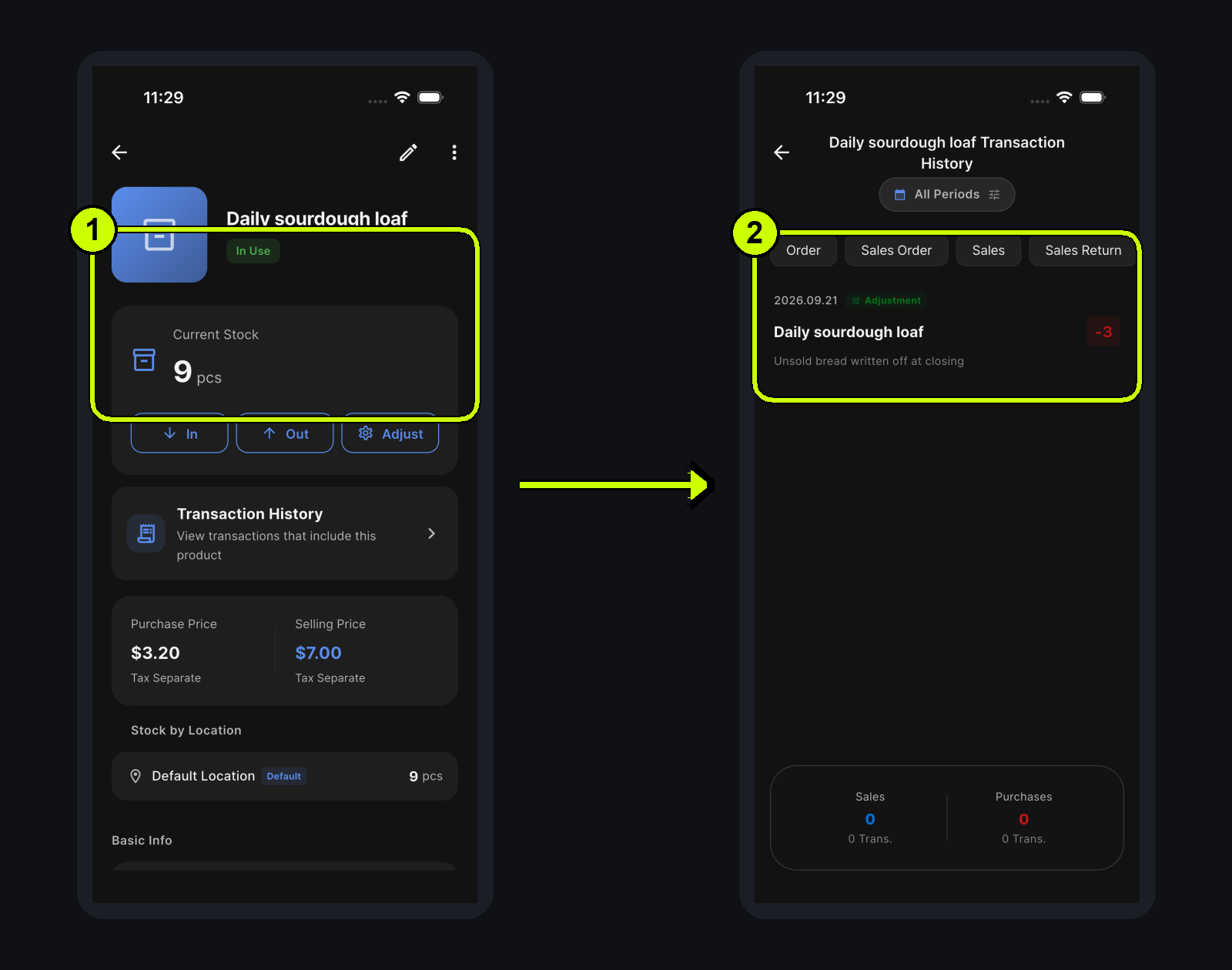
Waste and samples are adjustments, not returns
The three sourdough loaves left at closing did not come from a customer and did not go back to a supplier. There was no counterparty. The physical quantity simply became lower.
Use an inventory adjustment to match the count and leave a reason such as Unsold bread written off at closing. The same approach works for breakage, samples, or internal use when stock changes without a sale, purchase, or return.
This creates an explainable quantity history. It does not mean Salesdocks automatically calculates the financial cost of waste. The evidence is intentionally narrower: what changed, by how much, and why.
A reason saves the next closing shift from guessing again
The product histories now tell three different stories:
- sales return: marionberry jam
+1; - purchase return: bottled cold brew
-2; - inventory adjustment: daily sourdough
-3.
Overwriting the current count could make today’s number look right. Recording the transaction type and reason means the next person can explain why a quantity changed. Returns reverse an earlier product flow; a waste adjustment documents a change without a trading partner.
Returns and waste are not one generic correction
Ask where the product moved:
- Back from a customer: sales return.
- Back to a supplier: purchase return.
- Gone without a counterparty: inventory adjustment with a reason.
Even a clear process can drift when more people start working the counter. One person records immediately while another saves paper notes until closing. The next story, How can a team keep inventory records consistent?, replaces blame with a small set of shared rules.