Inventory drifted again when weekend help joined the counter
Juniper Street Bakery brought Jordan Lee in for busy weekends. Maya Collins had already learned to enter sales and purchases consistently and to separate returns from waste. She expected inventory to stay settled.
At Saturday closing, bottled cold brew and cookie boxes were off again. The problem was not simply transaction volume. Two people were recording the same products at different times and in different places.
The information existed, but it lived in four different places
Maya entered a sale after payment. Jordan used paper tick marks during a line and planned to batch them at closing. Customer returns sat beside the register with a verbal handoff. Broken products and samples appeared as photos in the team chat.
Nothing was completely undocumented. The evidence was simply split between Salesdocks, paper, conversation, and chat. Closing depended on one person remembering how to assemble every piece. As the team grew, so did the number of pieces that could be missed or entered twice.
Rule one: record sales and purchases before the workday ends
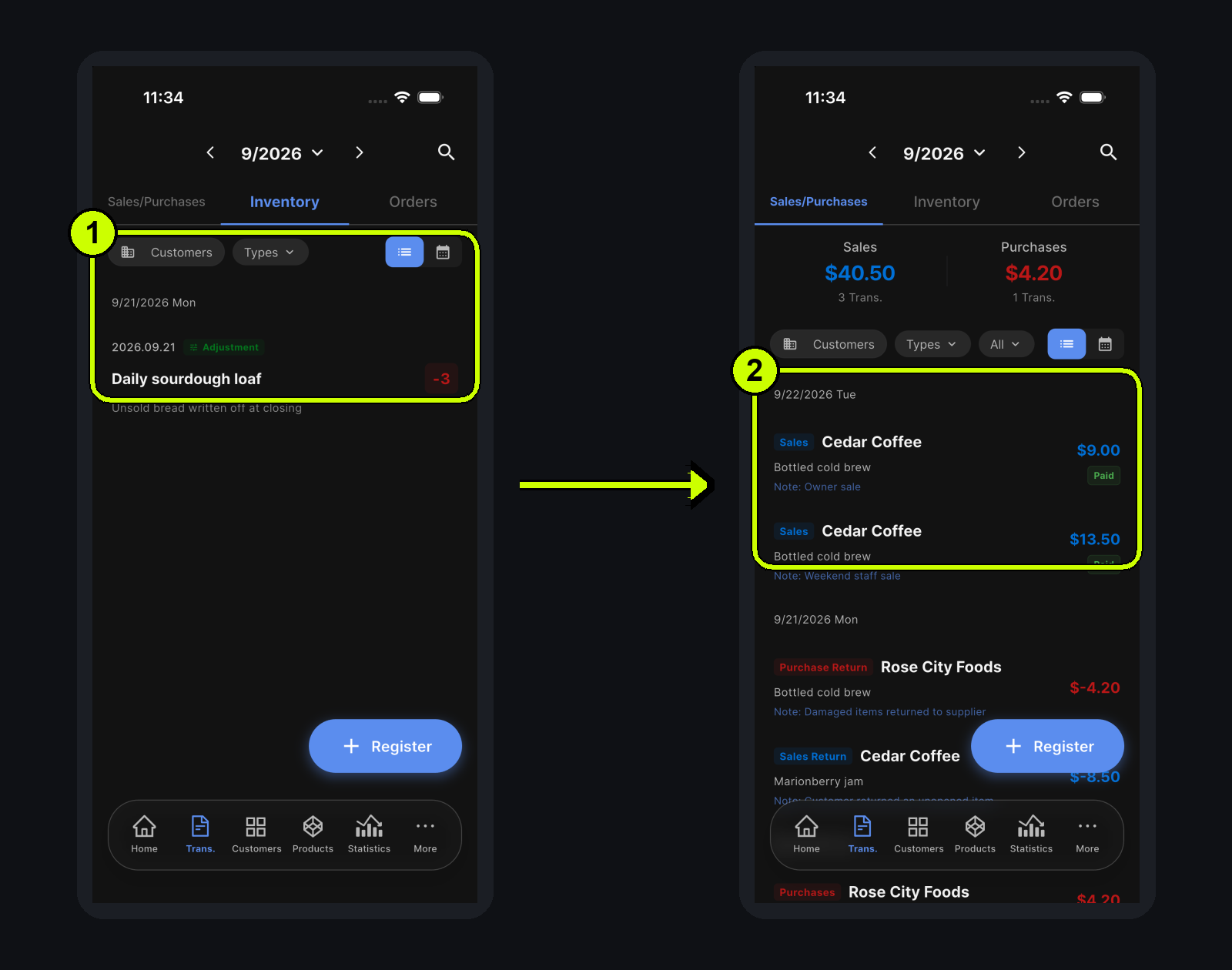
The team chose a workable deadline instead of demanding instant entry at every moment. A transaction could wait through a rush, but it had to reach the app before that person’s shift ended.
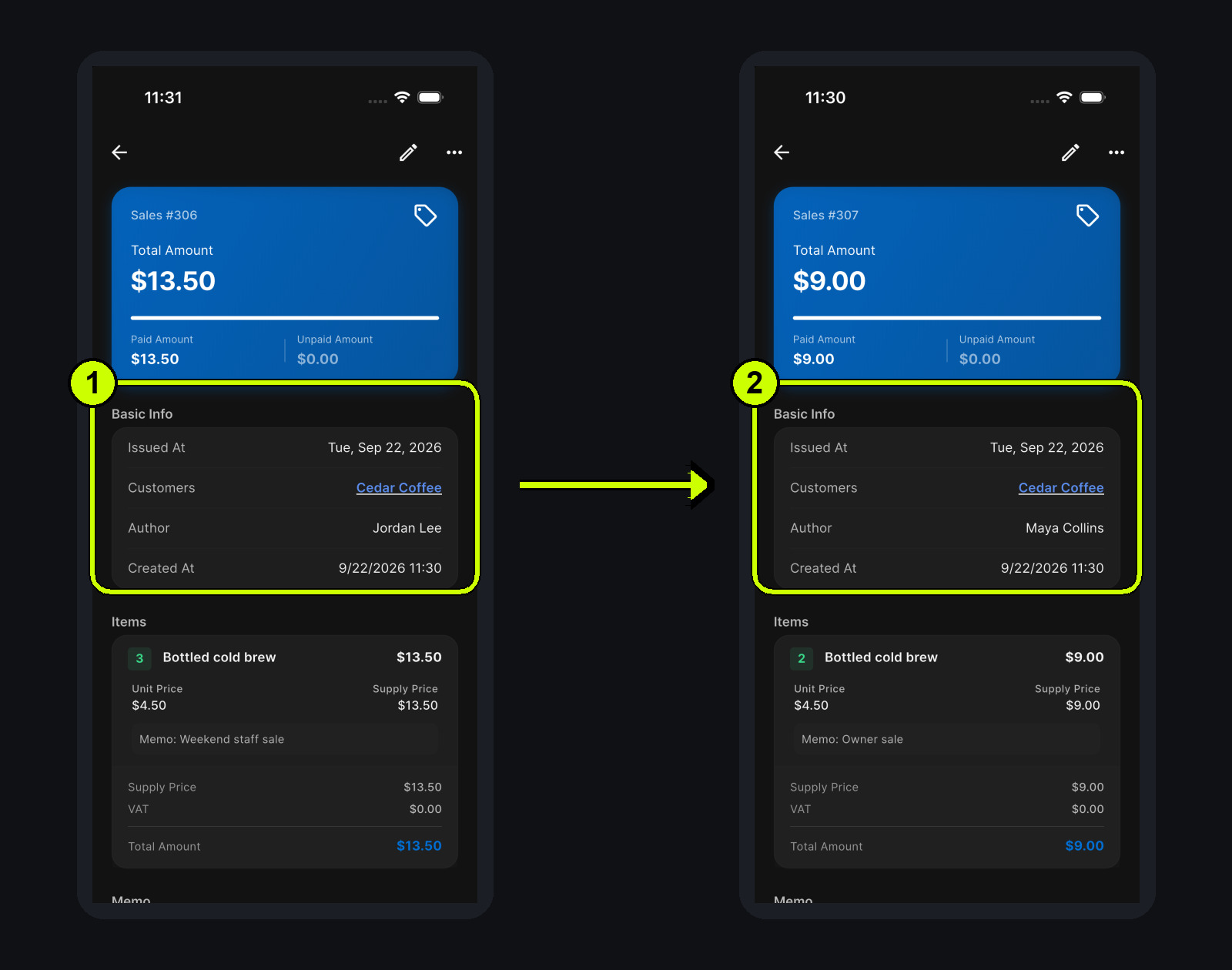
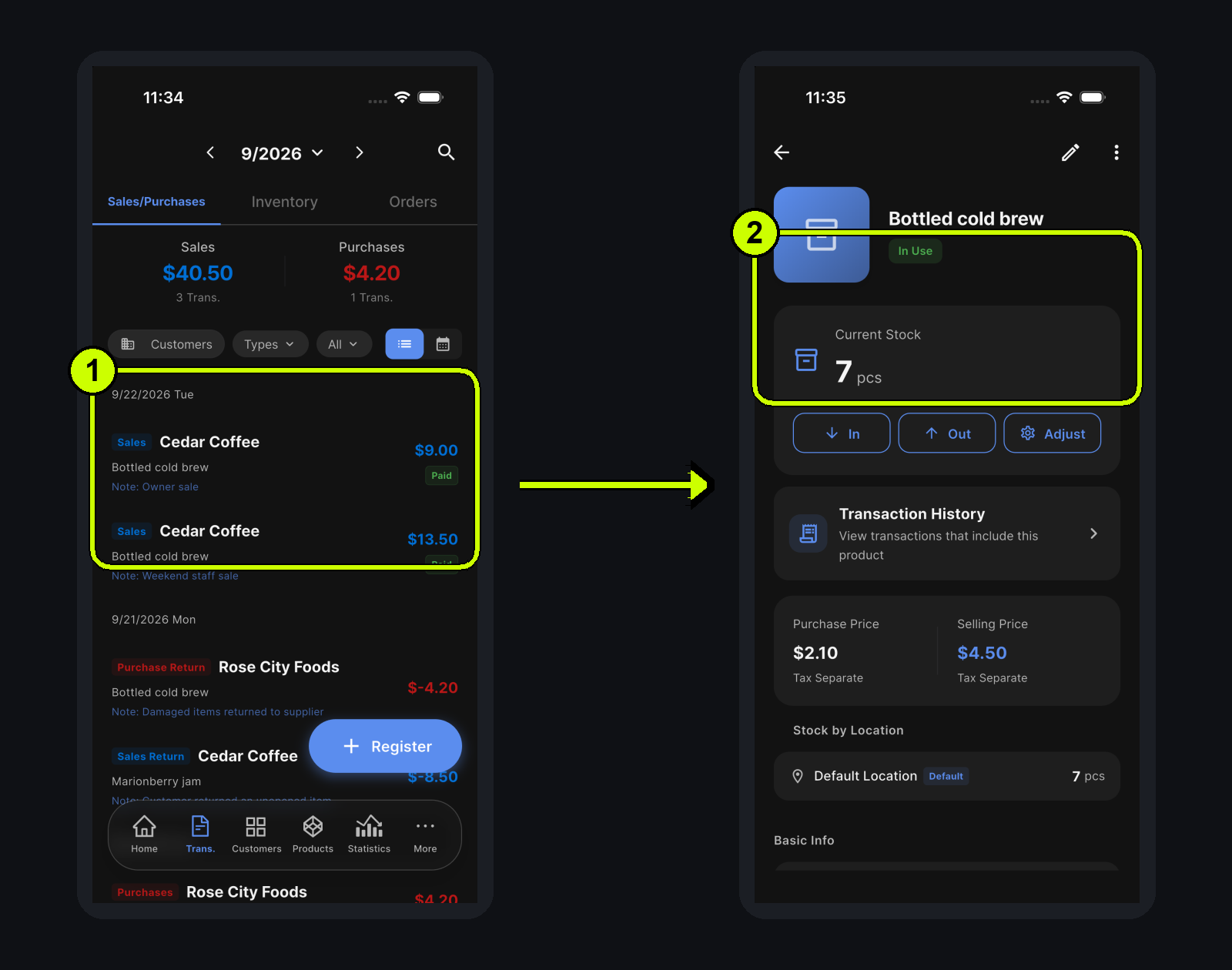
Cash and card sales followed the same rule because both move products out. The person unpacking a delivery checked the quantity and recorded the purchase. Product history and transaction authors made it possible to check what was already entered, preventing a second person from creating a duplicate.
Rule two: record a return in the direction of the original trade
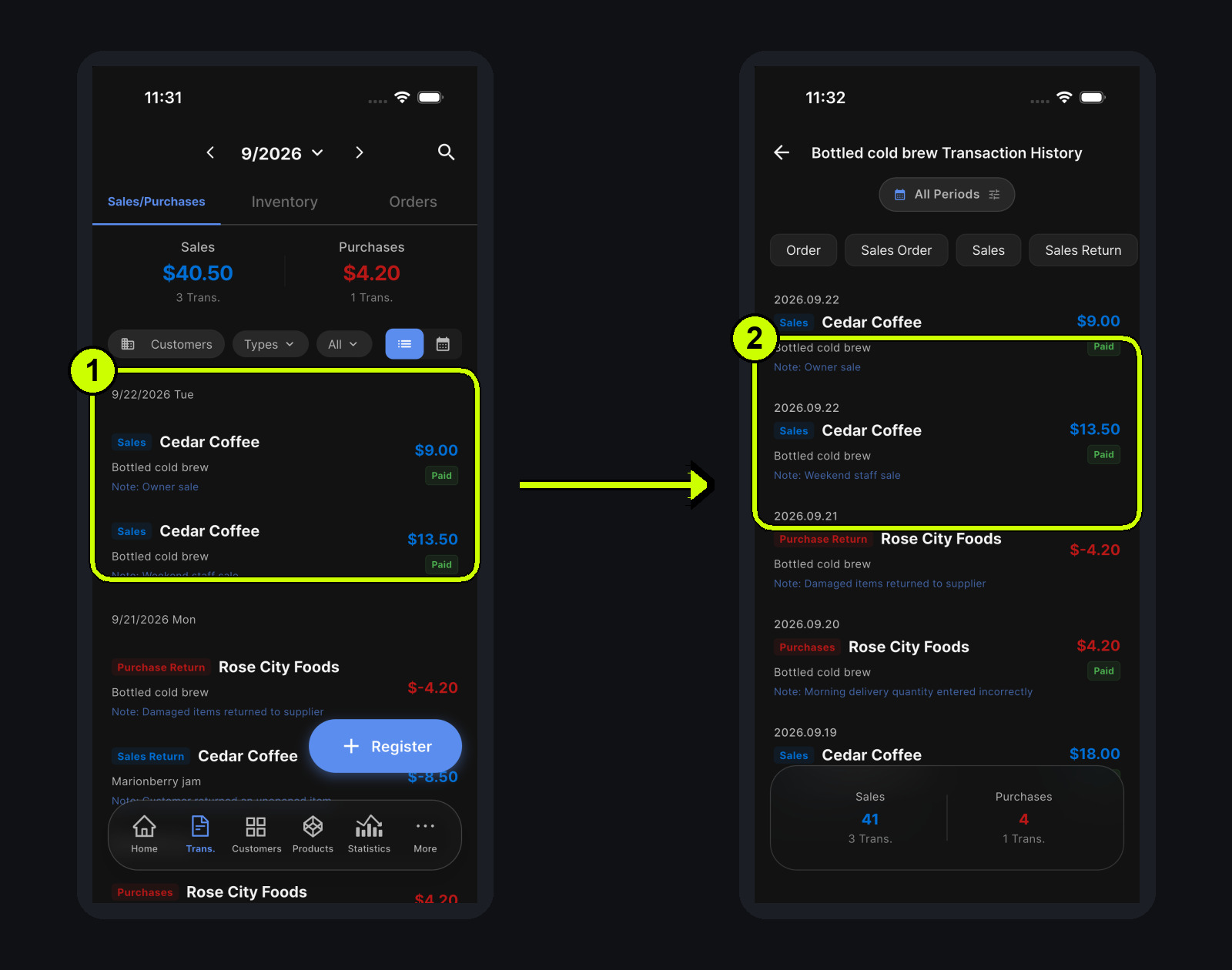
Returned products would no longer sit beside the register without context. Items coming back from customers became sales returns. Items waiting to go back to a supplier became purchase returns, recorded that day.
A verbal “this was returned” does not tell the next shift where the product came from. The transaction type preserves whether inventory should increase or decrease.
Rule three: adjust waste and breakage with a reason
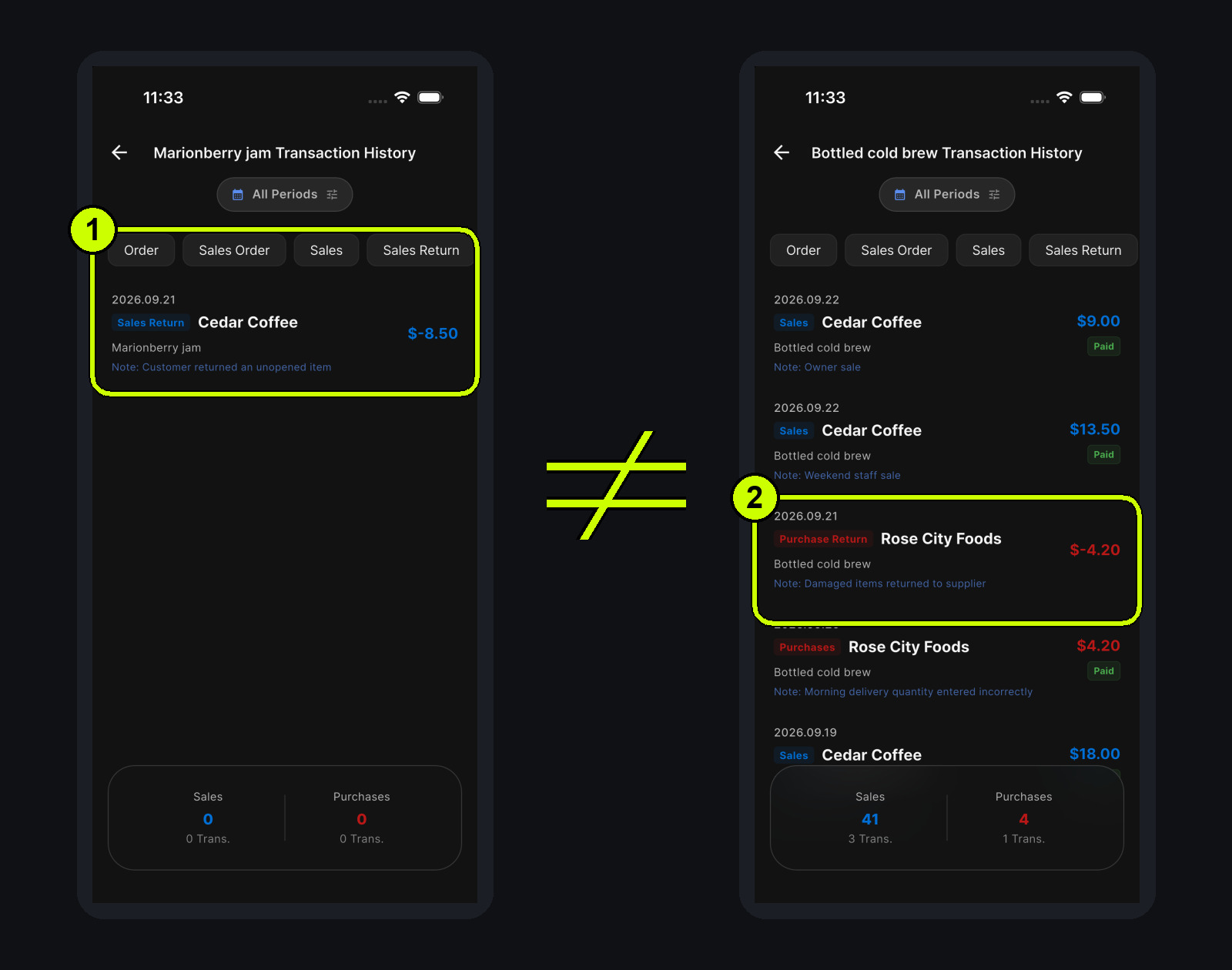
A photo in team chat is useful context, but it does not change inventory. Waste, breakage, and samples have no customer or supplier on the other side, so the team matches the physical quantity with an inventory adjustment and a short reason.
The note does not need to become a report. Closing waste, 3 or Broken in transit, 1 is enough for the next person to understand what changed.
Closing staff review history instead of overwriting it
When the physical count differs at closing, the team does not immediately force the current number. They first review that day’s sales, returns, and adjustments. A paper mark is checked against transactions before anything is added.
If the cause remains unknown, they adjust to the physical count with a reason such as Closing count difference. If the missing event is found later, the original transaction can be completed and the history reviewed again.
A larger team needs shared rules, not closer surveillance
Juniper Street Bakery kept only three rules:
- Record sales and purchases before the shift ends.
- Use the return type that matches the original direction.
- Give waste and breakage an adjustment reason.
The goal is not to identify who made a mistake. It is to let the next person understand the same stock change from the same history.
Choose one product with your team today. Agree on the recording deadline, where returns wait, and the short note used for waste. That small agreement removes much of the guessing from the next count.