The money arrived. Why does the customer still owe a balance?
Harbor Bakehouse receives ten bags of Organic Bread Flour 44 lb. The sale totals $3,300.00. At delivery, it pays $300 in cash and $1,000 into the supplier's business account. The remaining $2,000.00 is due later.
A few days later, a $1,200 transfer arrives in the business bank account. The customer still shows an outstanding balance in the app, and it can be tempting to edit the original sale or enter a negative transaction.
The transfer is not the problem. Recording a sale and recording money received are two different actions.

1. Keep the sale total separate from the amount still due
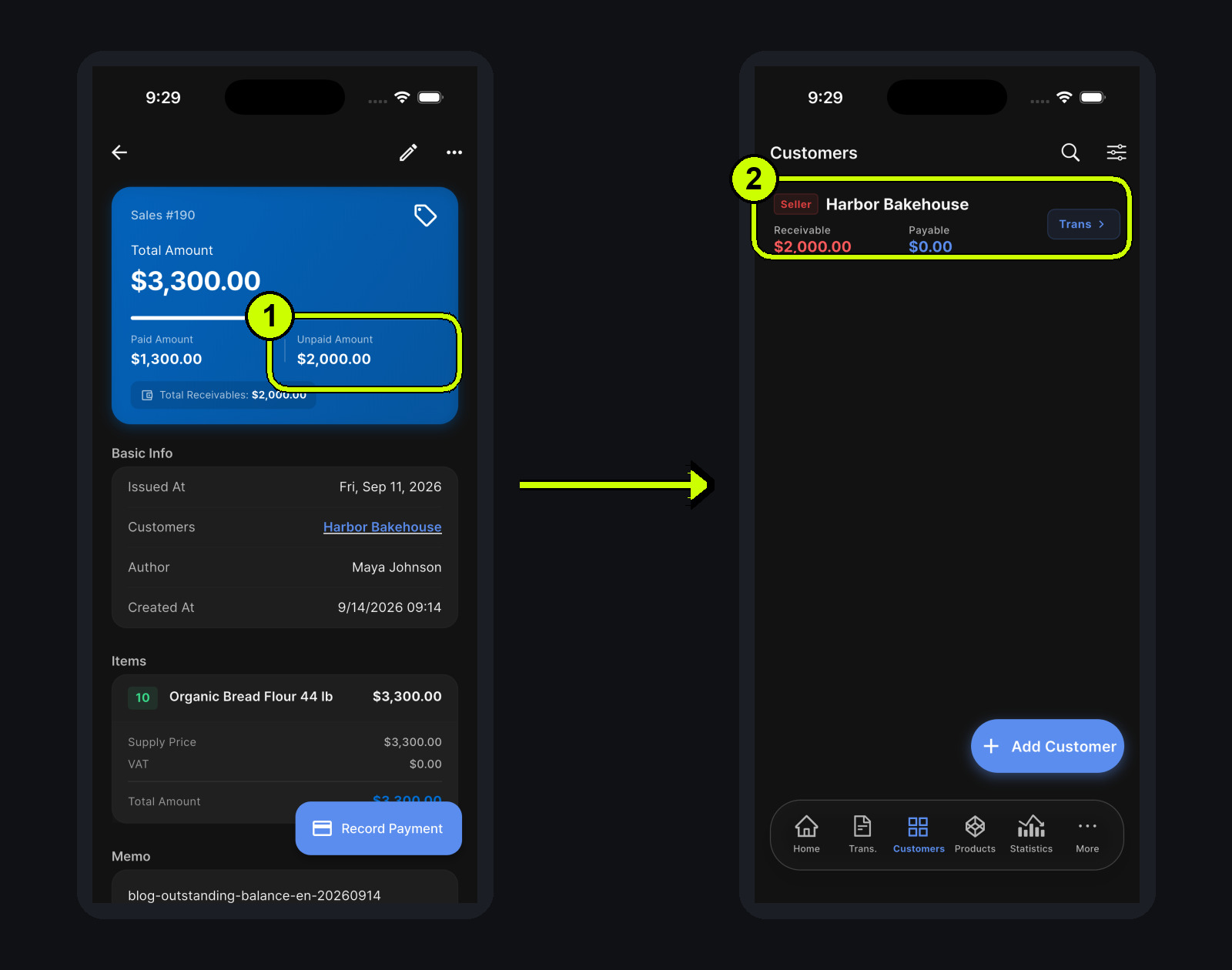
Record the full $3,300.00 sale. The $300 cash payment and $1,000 bank payment are already received, so the remaining $2,000.00 stays unpaid.
This preserves the actual sale while separating the $1,300.00 collected at delivery from the $2,000.00 still owed. On the left, the sale detail shows the unpaid amount. On the right, the same $2,000.00 appears as Harbor Bakehouse's receivable.
2. Record the later transfer as a payment, not a new sale
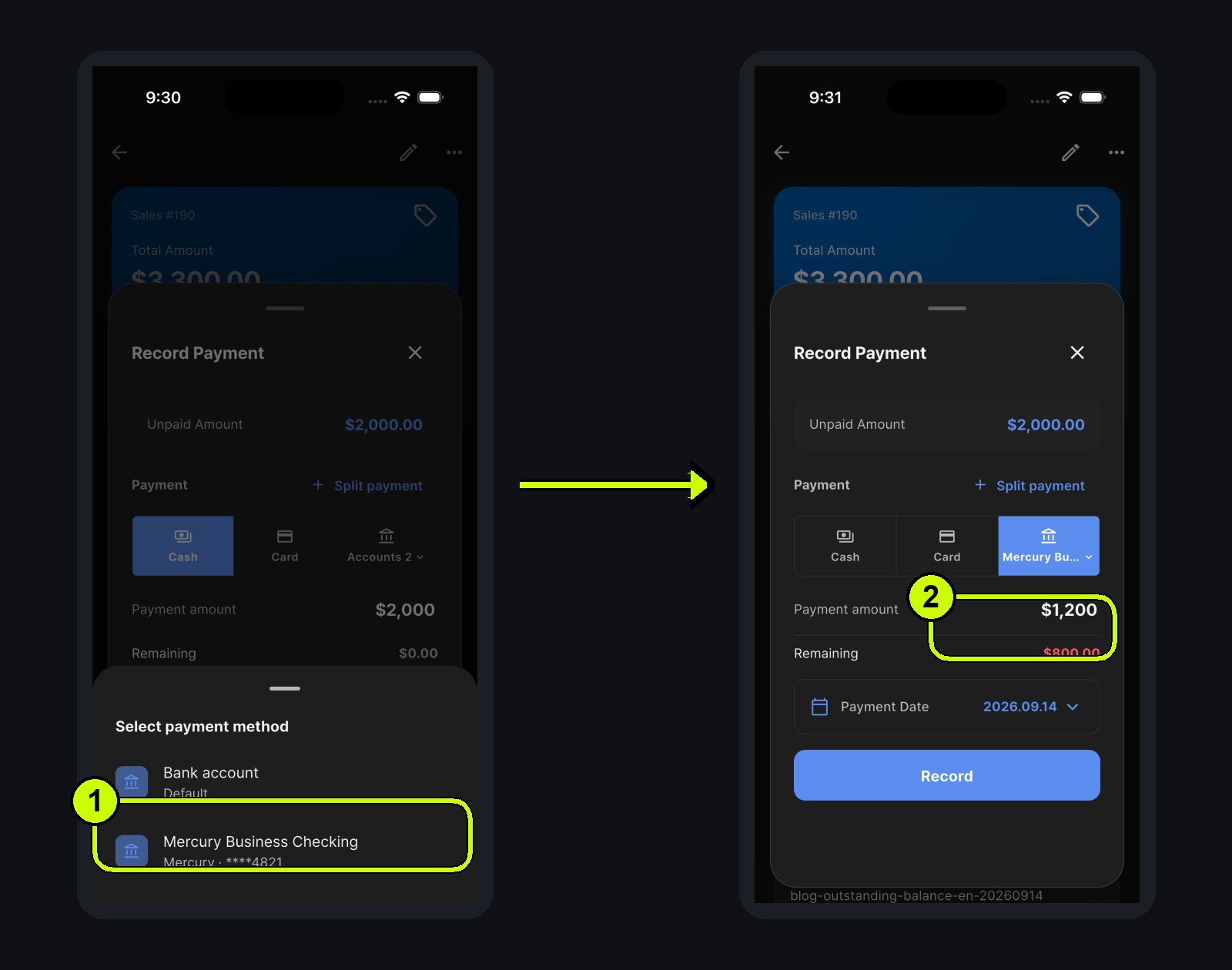
When the $1,200 transfer arrives, do not change the $3,300.00 sale and do not create another sale. Open the existing transaction, choose the account that actually received the money, Mercury Business Checking, and enter $1,200.
That record means, "part of an existing balance has been collected." It does not mean that a new product was sold. The sale stays intact while the customer payment reduces only the money still due.

3. Verify the remaining $800.00 in both places
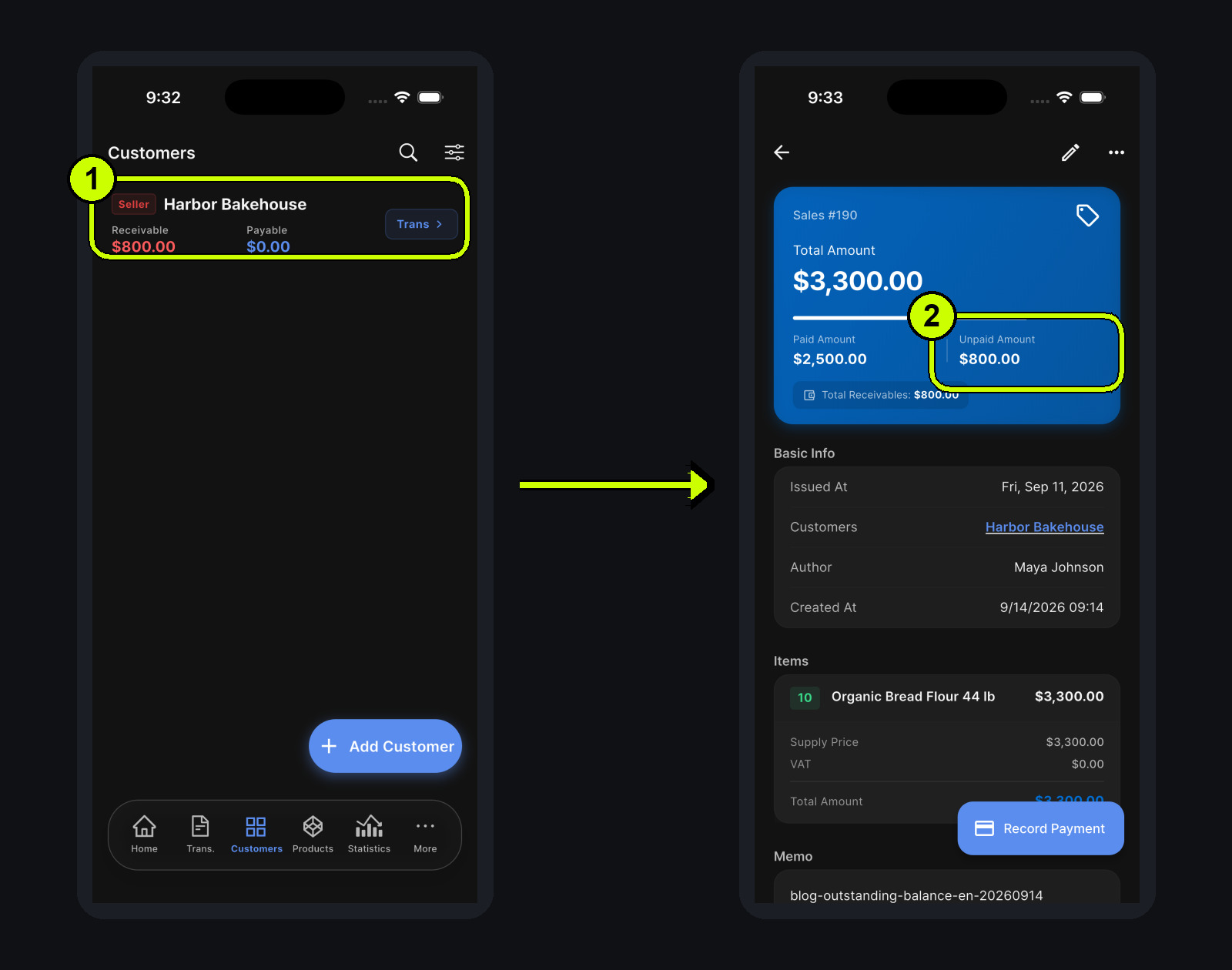
After recording the $1,200 collection, the receivable falls from $2,000.00 to $800.00. The customer list shows what Harbor Bakehouse still owes, while the sale detail shows $2,500.00 paid and $800.00 unpaid.
The $3,300.00 sale has not changed. Comparing those two screens confirms that the sale and the later collection were recorded separately and that the remaining balance is correct.
Four rules for credit sales
- Record only money actually received as payment when you create the sale.
- Leave the amount that has not been paid as credit.
- Record a later transfer as a payment against the existing sale, not as a change to the sale.
- Check the customer receivable and the sale's paid and unpaid amounts together.
With this separation, an outstanding balance is no longer a mystery. It is a clear record of what was sold, what was collected, and what remains to be paid.