The moment you start seeing people, not just totals
There is a familiar point in a growing business when the books start to feel heavier.
- Sales are up.
- The customer list is longer.
- There are more numbers everywhere.
And yet, it is harder to tell what is actually going well.
“Isn't the total sales number enough?” It is useful, but it leaves out the part of the story that helps you decide what to do next.

1. We understand relationships faster than totals
“Sales were $10,000 this month” is helpful. But these observations are usually more useful:
- “Hearthstone Bakery orders regularly, but still has an open balance.”
- “Harbor Coffee Roasters is smaller, but always settles cleanly.”
- “Maple Table Diner is busy work and needs more follow-up than expected.”
The problem is not that there are too many numbers. It is that the customer story inside those numbers has disappeared. A total can tell you how the month feels. It cannot tell you where your attention belongs.
2. Total sales show the result, not the reason
Seeing total sales rise is encouraging. It still does not answer the questions that shape the next week:
- Which customers are genuinely consistent?
- Where are payment checks taking time?
- Which terms should you revisit before the next order?
That is why a business can feel busy without feeling clearer. The totals may be correct; the unit used for making decisions is simply too broad.
3. Customer-by-customer changes the questions
When you look at the ledger by customer, the questions change.
- From “How much did we make this month?” to “Which relationship needs a follow-up?”
- From “Why do sales look like this?” to “Does this customer arrangement still work for us?”
The customer list and a single customer's settlement status turn one blended number into a real operating context. Here, Hearthstone Bakery's amount to receive and receivable are visible together instead of being lost in a total.
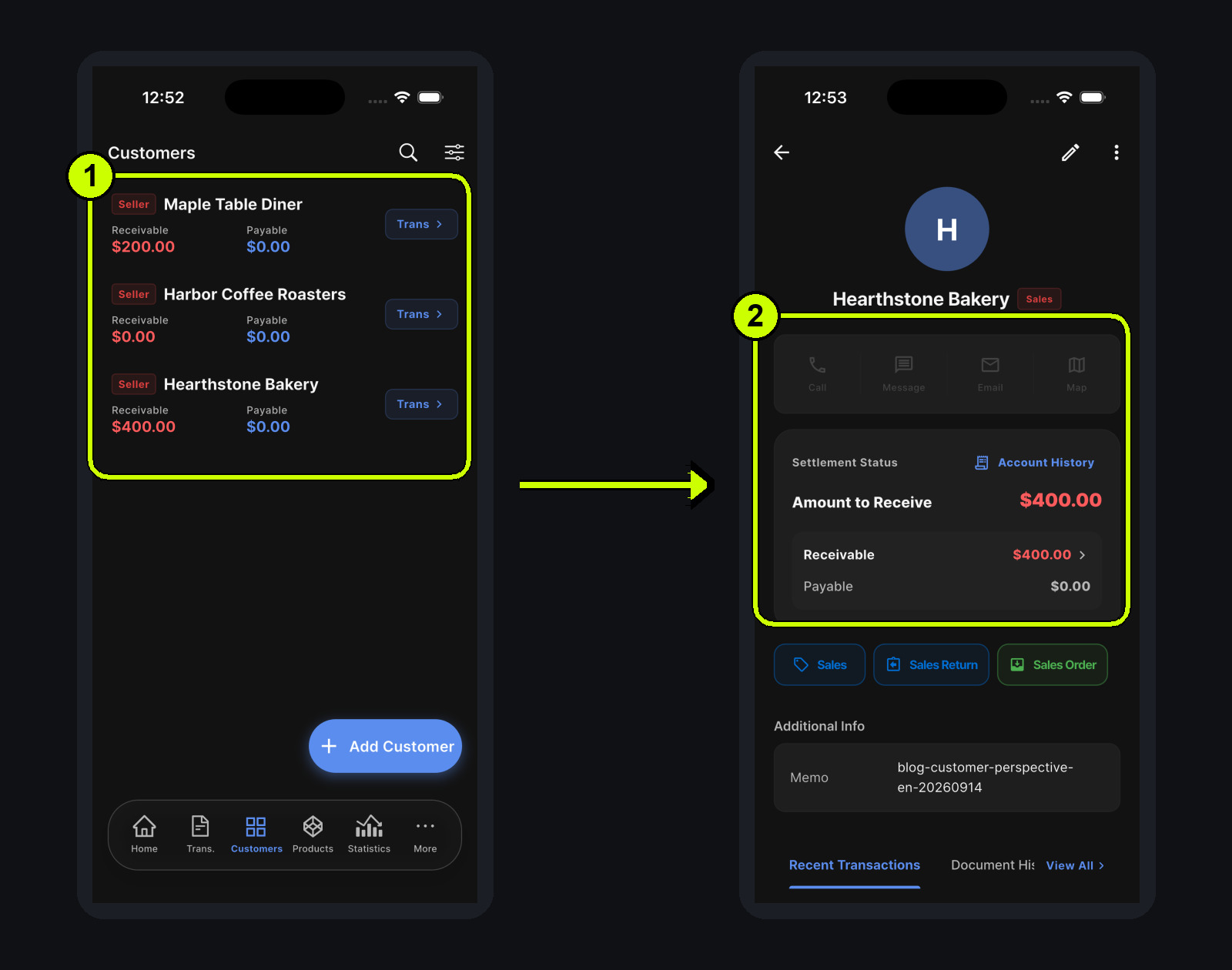
At that point, the ledger becomes more than a calculation. It becomes a way to decide the next action.
4. Customer records do not need to begin perfectly
Customer management often feels like extra work because it sounds like every field must be complete on day one. It does not. A name is enough to start. For early walk-in business, even a simple label such as regular or cash customer can be useful.
When you choose a customer while entering a sale, that transaction is connected to their history as part of the normal work. There is no separate spreadsheet to rebuild later from memory.
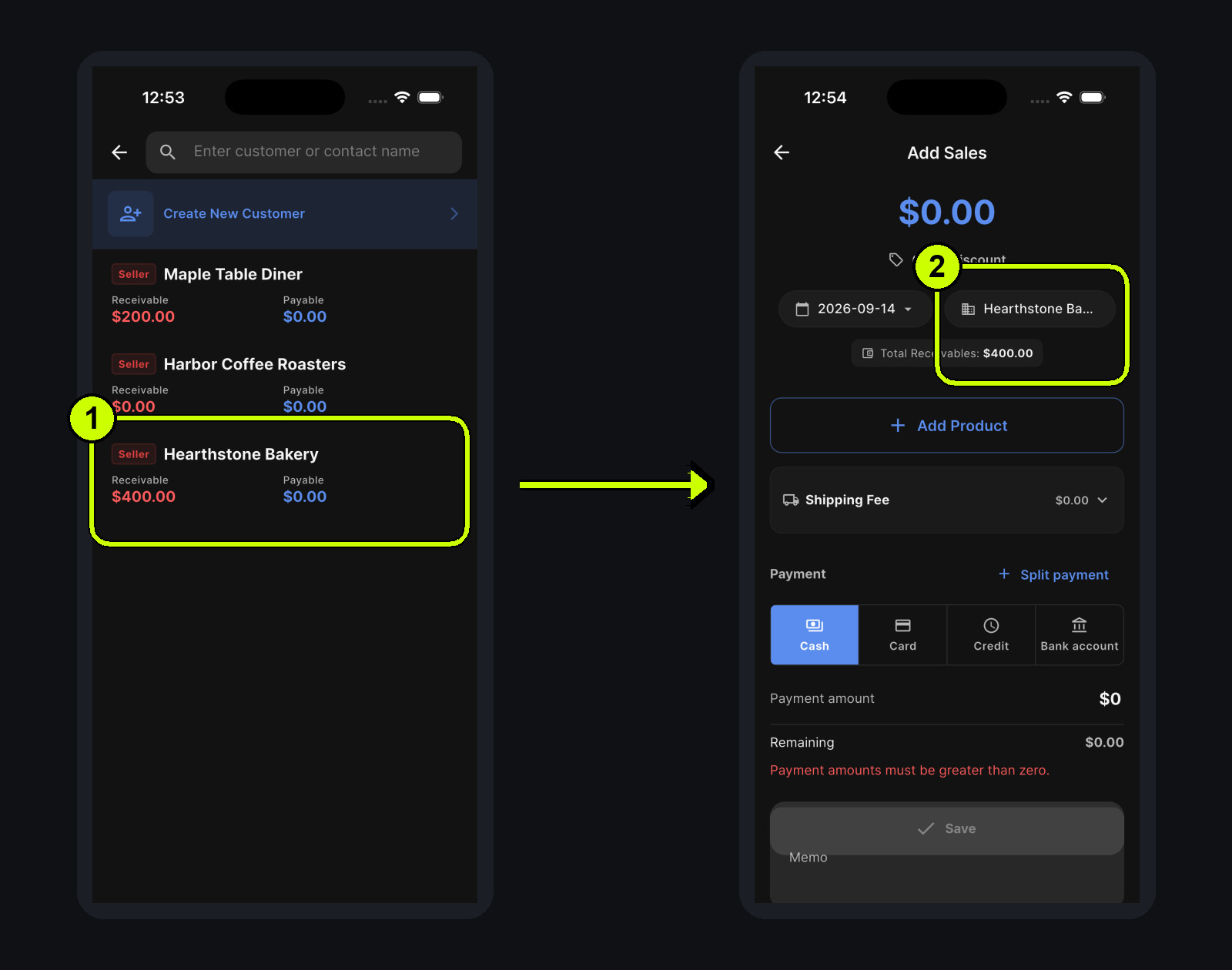
Over time, a customer becomes more than a name in a list. It becomes the place where sales and settlement history meet.

5. The result is not more organizing. It is easier choices.
Once those records have accumulated, decisions start to come faster.
- “We should revisit payment terms with this customer.”
- “This customer is steady enough to support more closely.”
- “We need to check whether this delivery pattern is still worth it.”
That insight does not come from memorizing numbers. It comes from seeing one customer's transactions in order. A screen that brings Hearthstone Bakery's sale, amount, and payment status together can reveal what an overall sales total leaves out.
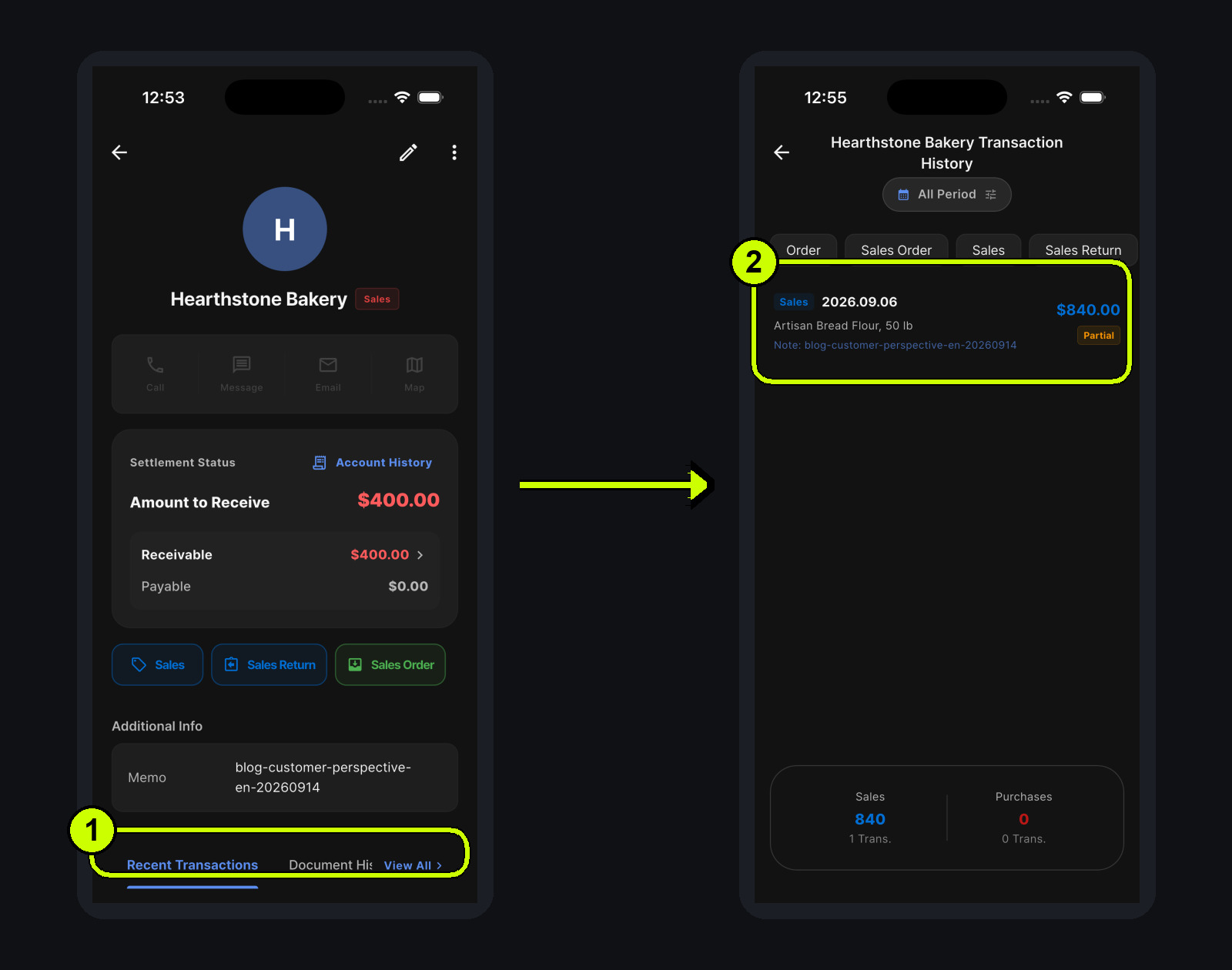
A ledger should help you choose
A useful ledger should do more than report how much you made. It should help you decide what to maintain, what to reduce, and where to spend more energy.
The ledger gets easier when you stop trying to understand a larger total and start looking at one customer at a time. Those individual stories add up to a clearer business.